July 6, 2026
The Art of Letting Bread Go
There is a particular kind of dark that exists only before 5 a.m. Not the dark of late nights, which still carries the residue of the day before, but the dark of very early mornings, clean, quiet, a little cold. It is in this dark that a baker’s day begins, long before the rest of the world has decided to wake up.
What fascinated me most about working in a bakery wasn’t the bread itself, it was the relationship bakers have with it, particularly with their starter, which isn’t a random ingredient sitting in a cupboard. It’s alive, in the loosest but truest sense of the word, it eats, it grows sluggish when neglected, it turns sour if forgotten for too long. A baker doesn’t consult a recipe to know what it needs on a given morning. They just know how to read it in a way thats so strangely beautiful.
I now cant help but think of this as something close to raising a child, and there is something to that comparison, carefully as it must be handled. The starter is fed daily. It is known, not in the abstract way one knows a fact, but in the specific way one knows a person: the smell it has when it is thriving, the texture it takes on when it is hungry, the faint sourness that says it has been left alone a day too long. A baker learns its moods before learning its uses.
But the comparison only goes so far, and its limit is instructive. A parent’s relationship to a child unfolds across decades, it deepens, complicates, occasionally frustrates, but it rarely ends. A baker’s relationship to a single loaf lasts a matter of days.
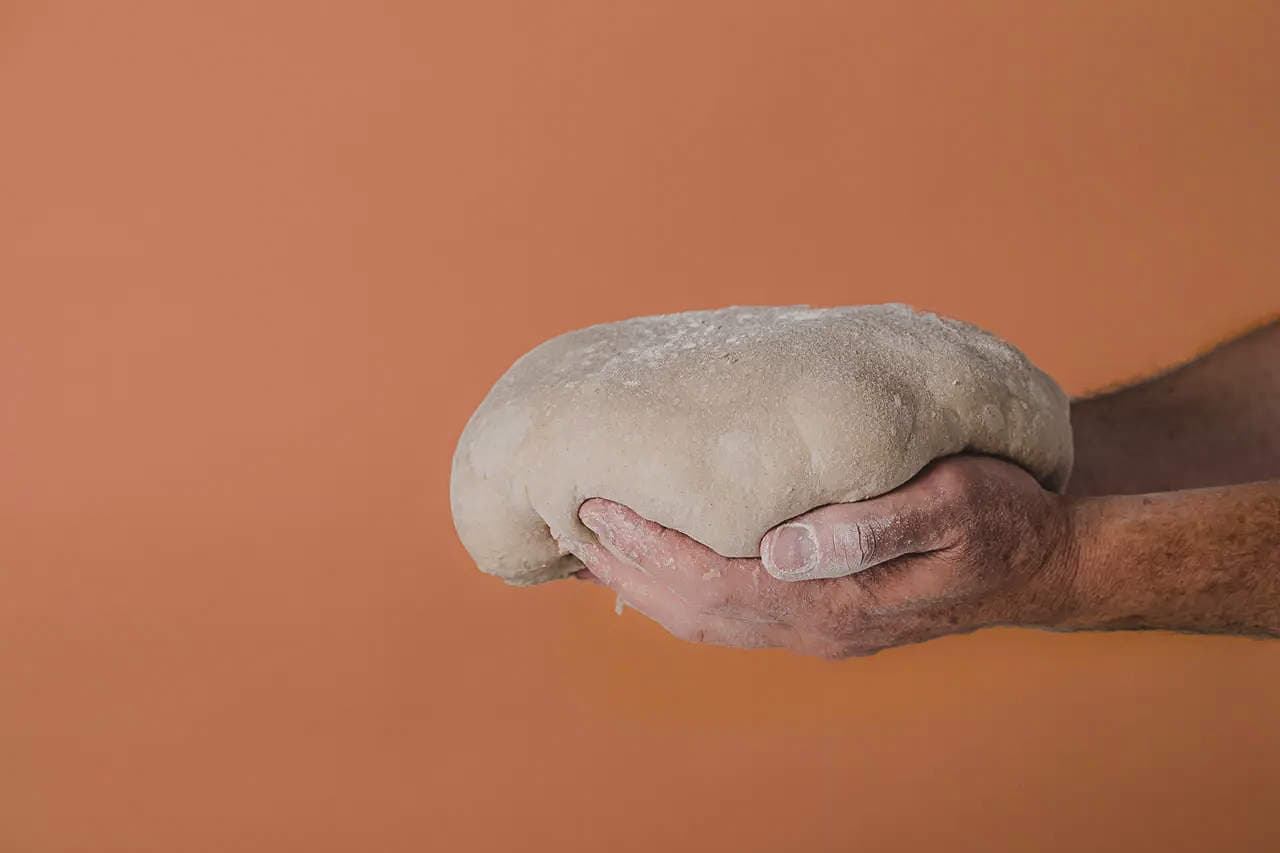
The first stage of letting the bread go is when the baker, after spending hours folding and resting and folding, places it in an oven far hotter than anything it has experienced, every gentle thing done to the dough beforehand turns out, in retrospect, to have been preparation for a trial it has to survive alone. The baker rarely has time to stand in front of the oven to watch it grow into this wonderful, well, bread. They’re already elbow-deep in the next batch.
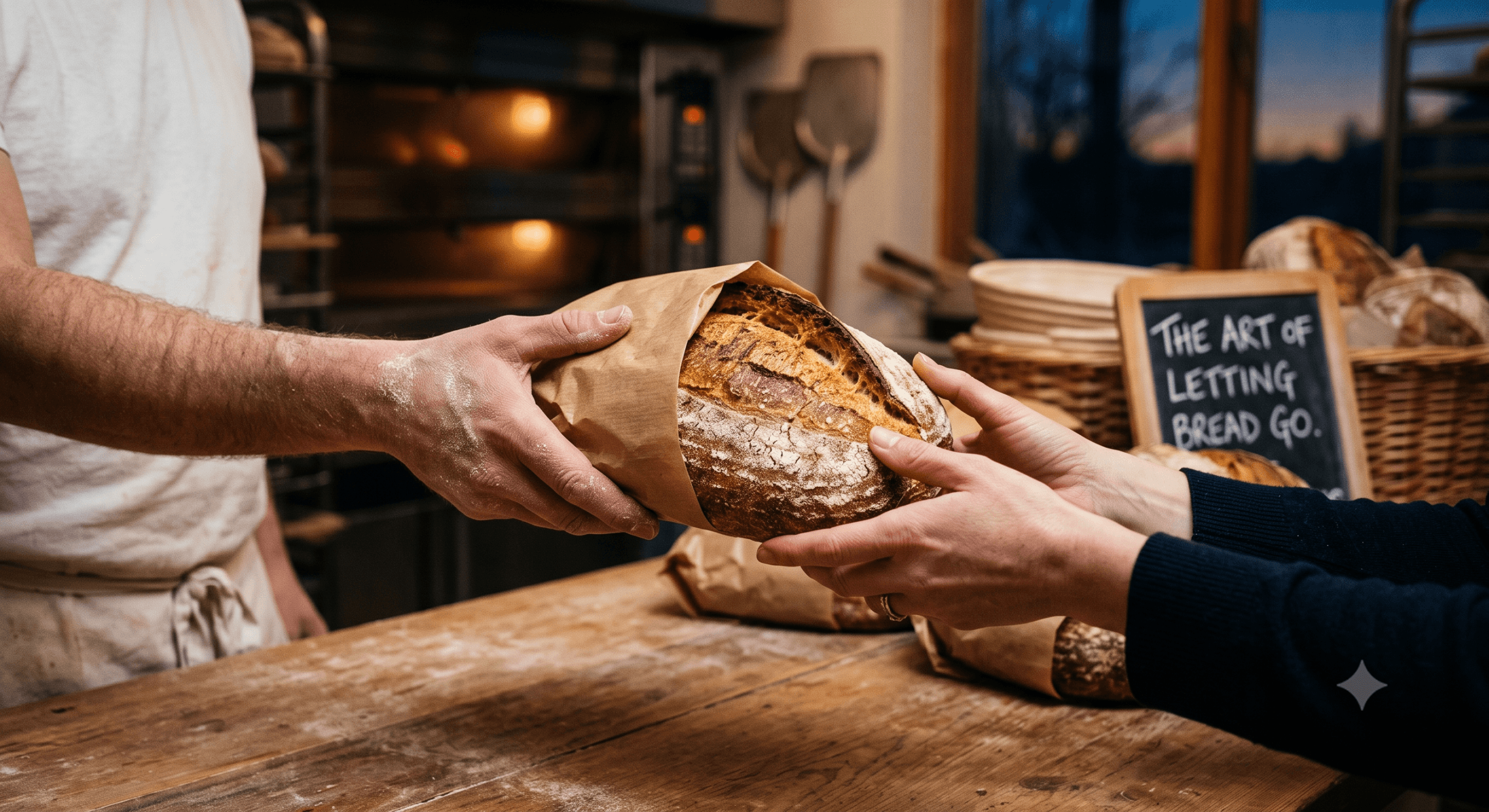
You’d expect all of that care to produce attachment. Yet a baker rarely tastes most of what they make. That loaf, which demanded days of feeding, watching, adjusting, surely that builds a bond worth protecting. But it is instead wrapped in paper and belongs, from that point on, to someone who has never met the person who made it.
At first, I found that a little sad. But the more I thought about it, the more I realised that’s the entire point. Bread has never been something to admire from a distance. It isn’t meant to sit behind glass or gather dust on a shelf. It exists for one purpose, to be torn, shared and enjoyed. Maybe that’s why baking feels different from so many other crafts. The reward isn’t owning what you’ve made. It’s knowing that something you’ve spent days creating has quietly become part of someone else’s life.
Bakers wake before sunrise for practical reasons, dough needs time, ovens need preheating, but there’s something in that early morning that goes beyond logistics. It’s a daily rehearsal in giving something your full attention and then letting it belong to someone else. Not withholding that love because it won’t last, but giving it fully anyway, knowing that the creating and the letting go were never in conflict, they were the same gesture all along.
- Riya Mirchandani,
Intern, Summer 2026
Share the love